Special Care
Special Care
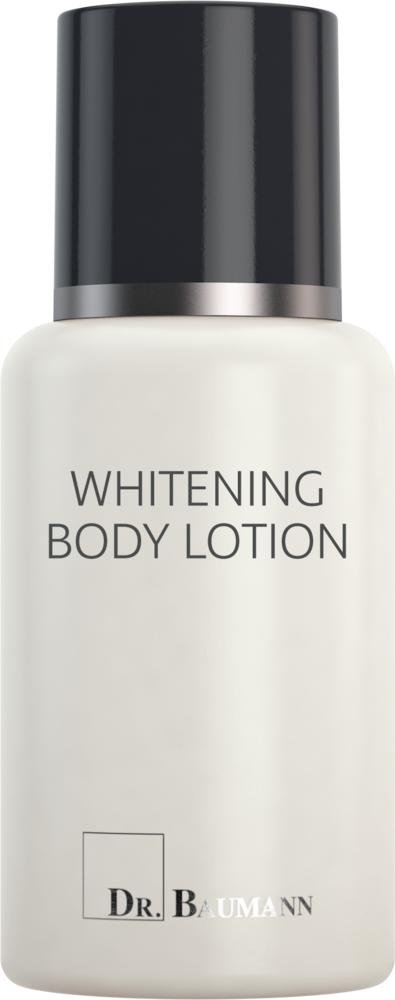
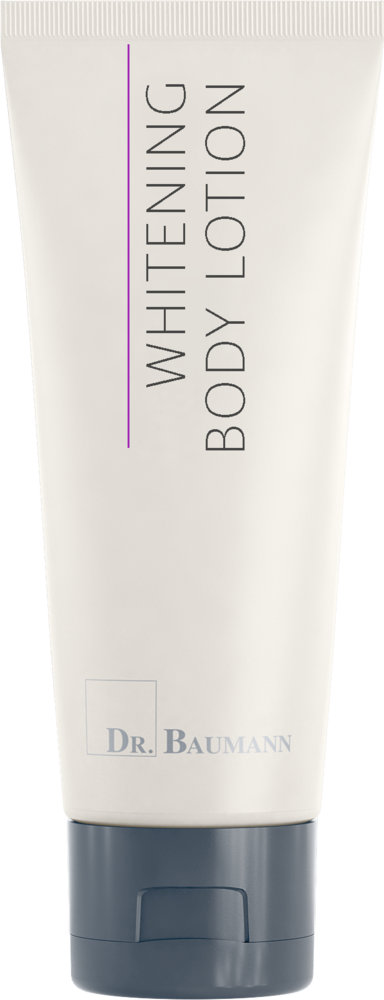
Lightening body lotion with immediate effect through mineral pigments and long-term effectiveness. High efficiency due to the positive interaction of pigments, niacinamide, vitamin C and alpha-arbutin.
Maximum skin compatibility and active skin care, especially for skin prone to pigmentation disorders, through valuable plant oils (shea butter, jojoba oil) and vitamins.
200 ml Bottle
Art.-No. 1127
75 ml Tube
Art.-No. 1927
Aqua, Butyrospermum Parkii Butter, Simmondsia Chinensis Seed Oil, Butylene Glycol, Niacinamide, Urea, Titanium Dioxide (nano), Alcohol, Polyglyceryl-10 Stearate, D-alpha-Tocopheryl Acetate, D-Mixed Tocopherols, Sodium Ascorbyl Phosphate, Alpha-Arbutin, Sodium Lactate, Lactic Acid, Panthenol, Stearyl Alcohol, Xanthan Gum, Sodium Hydroxide, Alumina, Simethicone
Aqua:
Water. It makes up approximately 65% of the weight of the human body and is therefore essential for bodily functions, including those of the skin. In many cosmetic products (aqueous solutions, cleansers, emulsions), water is the ingredient with the largest proportion of the formulation and forms the basis of the aqueous phase in emulsions. Water is a good solvent for polar (hydrophilic) substances such as alcohols, water-soluble vitamins, or salts. For use in cosmetic products, the water used is generally pre-treated to remove microorganisms that could lead to product spoilage or dissolved salts that might impair the stability of emulsions or gels (sterilization and desalination).
Butyrospermum Parkii Butter:
Shea butter: Fat from the seeds of the Butyrospermum parkii plant. It is particularly suitable for the care of dry skin and skin damaged, for example, by sun exposure. The skin becomes softer, and protection against dehydration and UV radiation is built up.
Simmondsia Chinensis Seed Oil:
Jojoba oil: A natural, liquid wax with excellent tolerability and outstanding protective and skin-nourishing properties. Creates a pleasant and velvety skin feel.
Butylene Glycol:
Solvent with moisturizing properties for the skin, very well tolerated, should be preferred to propylene glycol in products used daily.
Niacinamide:
Vitamin B3: Stabilizes the skin barrier, promotes the formation of ceramides, fatty acids, chilesterol, glycosylceramides, reduces transepidermal water loss, normalizes pigment irregularities, counteracts premature skin aging.
Urea:
Water-soluble urea is used in numerous cosmetic products. Urea is a component of the natural moisturizing factors in the stratum corneum (content between 7% and 12%; up to half that in chronically dry skin) and has a high water-binding capacity. It contributes to sustained skin hydration and reduces transepidermal water loss. Urea has a keratoplastic effect, and at higher concentrations, a keratolytic effect, and is therefore also used in the care of skin affected by psoriasis or atopic dermatitis (eczema). Furthermore, urea is able to reduce the irritating potential of surfactants.
Titanium Dioxide (nano):
Titanium dioxide, a natural mineral, is used in fine powder form as a highly opaque white pigment in decorative cosmetics (CI 77891) and as a particularly skin-friendly (inert) sunscreen filter, primarily effective in the UVB range. Surface-treated titanium dioxide (e.g., with alumina or hydroxystearic acid) is often used to improve its application properties. It is sometimes used as a nanomaterial; contrary to some claims, nanoscale titanium dioxide cannot penetrate the skin.
Alcohol:
Ethyl alcohol: Biocompatible. Has a refreshing and antibacterial effect. Also serves as a solvent for other ingredients. Contrary to other claims, there is no risk of a drying effect on the skin at normal concentrations!
Polyglyceryl-10 Stearate:
Emulsifier for plant-based O/W emulsions
D-alpha-Tocopheryl Acetate:
Natural vitamin E acetate; storage form in the skin, converted into the active form by breaking the acetate bond; antioxidant with skin-protecting properties, e.g., against UV radiation, moisturizing, delays premature skin aging
D-Mixed Tocopherols:
This is the name given to a mixture of natural tocopherols (vitamin E; D-alpha, beta, gamma and delta tocopherol). Vitamin E is the most important skin-protecting vitamin, shielding the skin from UV rays and free radicals.
Sodium Ascorbyl Phosphate:
Vitamin C is stored as a phosphate ester. It is a water-soluble vitamin with antioxidant properties. It counteracts cell-damaging free radicals, protects unsaturated fatty acids from oxidation, and is essential for the formation of collagen and thus all connective tissue, as well as for the function of the immune system. Together with vitamin E, it is very effective in preventing the formation of nitrosamines.
Alpha-Arbutin:
Glycosidically bound hydroquinone is used for skin lightening and is effective even at low concentrations, therefore better tolerated than the often used beta-arbutin.
Sodium Lactate:
Sodium salt of lactic acid (sodium lactate): Has a moisturizing effect on the skin, with the physiological pH value of the skin of an average of 5.5. Important component of the natural moisturizing factor (NMF) and the acid mantle of the skin.
Lactic Acid:
Lactic acid. Occurs as a metabolic product in the body and on the skin; in higher concentrations and at a low pH value of 2 to 3, it has an exfoliating effect on the stratum corneum; in buffered form (physiological pH value of the skin approx. 5.5), it supports the moisture content and preserves the skin's acid mantle.
Panthenol:
D-Panthenol (Provitamin B5): Improves and increases the skin's moisture retention, has an anti-inflammatory effect, and soothes or inhibits itching. It stimulates epithelialization, allowing minor wounds (such as shaving), abrasions, and blisters to heal more quickly. It also promotes skin regeneration and combats cracked and brittle skin. When used in hair care products, it is not only deposited on the hair and scalp but also penetrates them, providing long-lasting effects. Since pantothenic acid is an important component of healthy hair, scientific studies have shown that its precursor, D-Panthenol, acts as "food for the hair." It provides long-lasting moisture, improves manageability, reduces split ends, improves the condition of damaged hair, thickens hair, and adds shine. It also reduces fingernail brittleness.
Stearyl Alcohol:
A fatty alcohol identical to those found in the body, occurring as an intermediate in fat metabolism, also present in small amounts in the epidermis. A consistency enhancer in emulsions.
Xanthan Gum:
Polysaccharide, a natural gelling agent with very good skin-friendly properties, is obtained biotechnologically.
Sodium Hydroxide:
Sodium hydroxide. Used to adjust the pH of cosmetic products. Sodium and hydroxide ions are identical to those found in the body.
Alumina:
Aluminum oxide; a natural mineral, used as an additive and filler. No aluminum ions are released from aluminum oxide.
Simethicone:
Mixture of silica gel and dimethicone (silicone oil), powder aid, filler in decorative products, skin-neutral
