
Body Care
Body Care
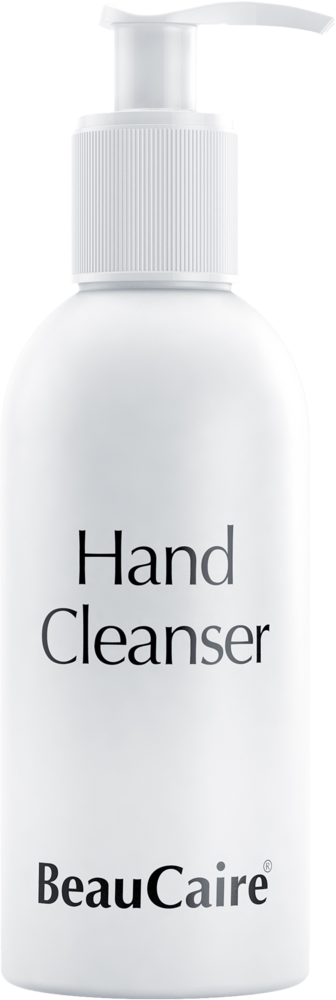
Gentle but thorough cleansing of your hands is the most important prerequisite for good hygiene and personal health. The Hand Cleanser with its mild detergents is therefore ideal for meeting all requirements of optimum hand hygiene.
1000 ml Bottle
Art.-No. 132
250 ml Bottle
Art.-No. 131
Aqua, Butylene Glycol, Urea, Sodium Lauroyl Sarcosinate, Lauryl Glucoside, Sodium Laureth Sulfate, Glyceryl Oleate, Lactic Acid, Sodium Hyaluronate, Melaleuca Alternifolia Leaf Oil, Coco-Glucoside, Xanthan Gum, Aniba Rosaeodora Wood Oil, Linalool
Aqua:
Water. It makes up approximately 65% of the weight of the human body and is therefore essential for bodily functions, including those of the skin. In many cosmetic products (aqueous solutions, cleansers, emulsions), water is the ingredient with the largest proportion of the formulation and forms the basis of the aqueous phase in emulsions. Water is a good solvent for polar (hydrophilic) substances such as alcohols, water-soluble vitamins, or salts. For use in cosmetic products, the water used is generally pre-treated to remove microorganisms that could lead to product spoilage or dissolved salts that might impair the stability of emulsions or gels (sterilization and desalination).
Butylene Glycol:
Solvent with moisturizing properties for the skin, very well tolerated, should be preferred to propylene glycol in products used daily.
Urea:
Water-soluble urea is used in numerous cosmetic products. Urea is a component of the natural moisturizing factors in the stratum corneum (content between 7% and 12%; up to half that in chronically dry skin) and has a high water-binding capacity. It contributes to sustained skin hydration and reduces transepidermal water loss. Urea has a keratoplastic effect, and at higher concentrations, a keratolytic effect, and is therefore also used in the care of skin affected by psoriasis or atopic dermatitis (eczema). Furthermore, urea is able to reduce the irritating potential of surfactants.
Sodium Lauroyl Sarcosinate:
Mild basic surfactant, cleanses the skin without stripping it of its natural oils; derived from coconut oil.
Lauryl Glucoside:
A very skin- and mucous membrane-compatible, glucose-based surfactant for shampoos and shower gels, derived from plant-based raw materials.
Sodium Laureth Sulfate:
Mild basic surfactant with intensive washing power, derived from coconut oil.
Glyceryl Oleate:
It is a component of sebum, a partially saponified fat, with skin-protecting and moisturizing properties, and acts as a re-fatting agent in cleansing products. It also serves as a consistency enhancer and emulsifier for lotions and creams.
Lactic Acid:
Lactic acid. Occurs as a metabolic product in the body and on the skin; in higher concentrations and at a low pH value of 2 to 3, it has an exfoliating effect on the stratum corneum; in buffered form (physiological pH value of the skin approx. 5.5), it supports the moisture content and preserves the skin's acid mantle.
Sodium Hyaluronate:
Sodium salt of hyaluronic acid. A natural moisturizer with skin-smoothing properties, an important natural component of the lower layers of the skin (dermis). Formerly extracted from rooster combs, it is now produced biotechnologically in improved quality.
Melaleuca Alternifolia Leaf Oil:
Tea tree oil: Essential oil with pronounced antiseptic properties, especially in combination with manuka and lavender.
Coco-Glucoside:
Mild sugar surfactant
Xanthan Gum:
Polysaccharide, a natural gelling agent with very good skin-friendly properties, is obtained biotechnologically.
Aniba Rosaeodora Wood Oil:
Rosewood oil, essential oil, skin-soothing, immune-stimulating
Linalool:
Fragrance, a natural component of essential oils.
