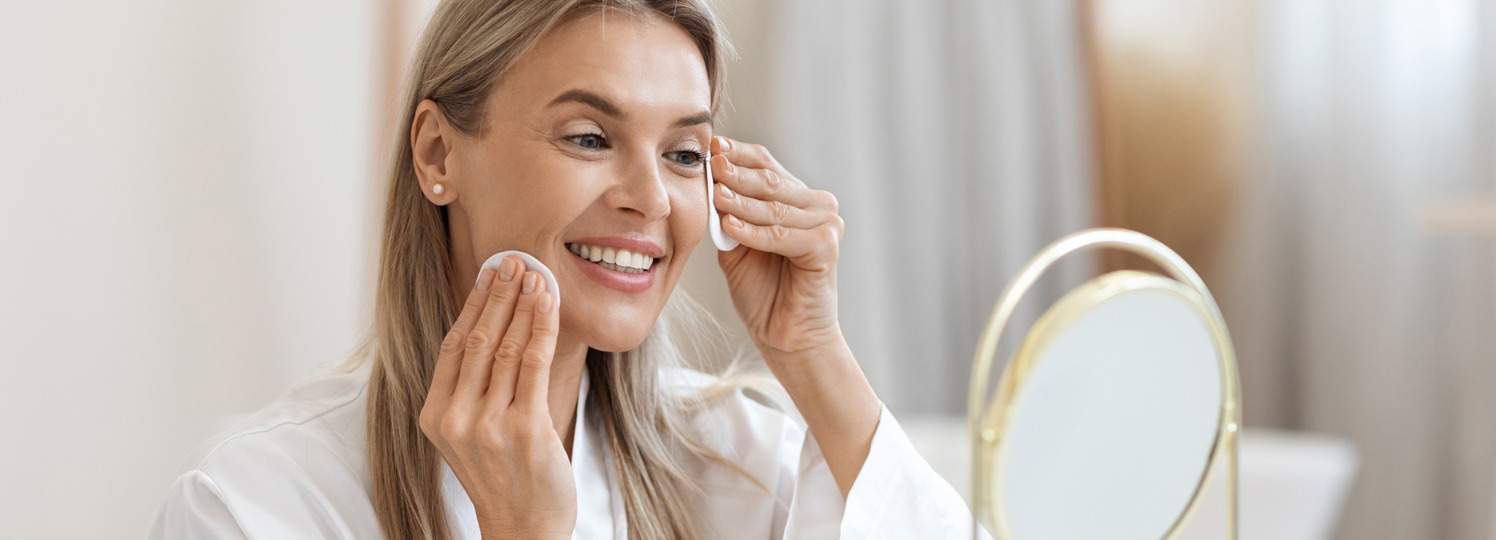
Facial Cleansing
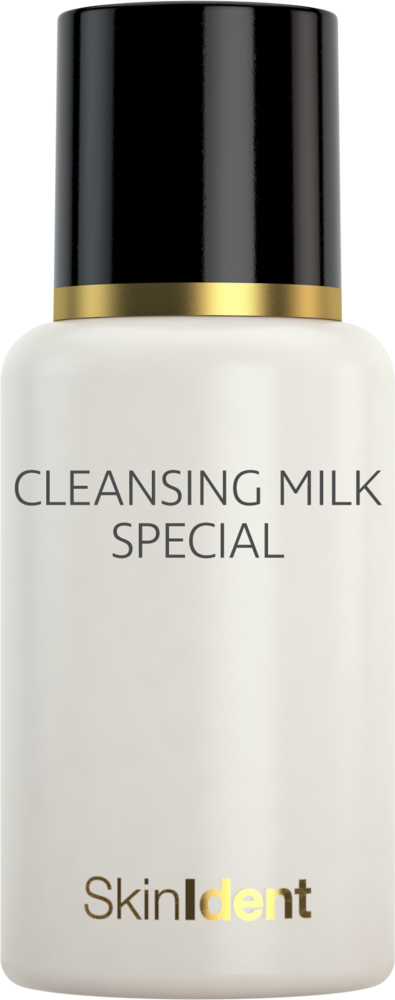
Facial Cleansing
This high quality content rich cleansing milk designed for the most discerning requirements removes both the excess sebum (oil) and the dirt particles from the skin. At the same time valuable active ingredients such as Vitamin E, Hyaluronic acid, Lecithin and Squaleen have gently maintaining characteristics. The CLEANSING MILK SPECIAL is removed with FACIAL TONIC or FACIAL TONIC SPECIAL. These SkinIdent products compliment each other in an ideal way, so that the skin is perfectly prepared for the treatment that follows.
200 ml Bottle
Art.-No. 9037
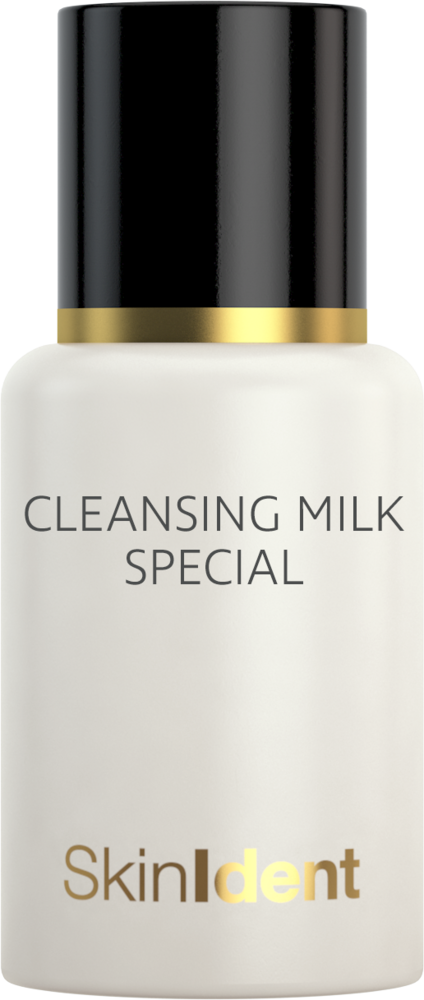
75 ml Bottle
Art.-No. 9937
Aqua, Caprylic/Capric Triglyceride, Glycerin, Alcohol, Urea, Vegetable Oil, Hydrogenated Phosphatidylcholine, D-alpha-Tocopheryl Acetate, Squalene, D-Mixed Tocopherols, Lactic Acid, Sodium Hyaluronate, Allantoin, Stearyl Alcohol, Citric Acid, Cetearyl Glucoside, Sodium Hydroxide
Aqua:
Water. It makes up approximately 65% of the weight of the human body and is therefore essential for bodily functions, including those of the skin. In many cosmetic products (aqueous solutions, cleansers, emulsions), water is the ingredient with the largest proportion of the formulation and forms the basis of the aqueous phase in emulsions. Water is a good solvent for polar (hydrophilic) substances such as alcohols, water-soluble vitamins, or salts. For use in cosmetic products, the water used is generally pre-treated to remove microorganisms that could lead to product spoilage or dissolved salts that might impair the stability of emulsions or gels (sterilization and desalination).
Caprylic/Capric Triglyceride:
Vegetable neutral oil (triglyceride) with short-chain fatty acids. Has moisturizing properties.
Glycerin:
Body-identical, a component of the natural moisturizing factor and lipids/triglycerides. Improves skin hydration, influences the consistency and texture of cosmetic products, and has antimicrobial properties.
Alcohol:
Ethyl alcohol: Biocompatible. Has a refreshing and antibacterial effect. Also serves as a solvent for other ingredients. Contrary to other claims, there is no risk of a drying effect on the skin at normal concentrations!
Urea:
Water-soluble urea is used in numerous cosmetic products. Urea is a component of the natural moisturizing factors in the stratum corneum (content between 7% and 12%; up to half that in chronically dry skin) and has a high water-binding capacity. It contributes to sustained skin hydration and reduces transepidermal water loss. Urea has a keratoplastic effect, and at higher concentrations, a keratolytic effect, and is therefore also used in the care of skin affected by psoriasis or atopic dermatitis (eczema). Furthermore, urea is able to reduce the irritating potential of surfactants.
Vegetable Oil:
Skin-identical base oil made from plant-based raw materials, also declared as Olus Oil.
Hydrogenated Phosphatidylcholine:
A phospholipid produced by the body.
D-alpha-Tocopheryl Acetate:
Natural vitamin E acetate; storage form in the skin, converted into the active form by breaking the acetate bond; antioxidant with skin-protecting properties, e.g., against UV radiation, moisturizing, delays premature skin aging
Squalene:
Squalene: A highly spreading oil, also present in sebum, improves the flow properties of sebum, a valuable conditioning oil. It is obtained from the unsaponifiable fraction of olive oil.
D-Mixed Tocopherols:
This is the name given to a mixture of natural tocopherols (vitamin E; D-alpha, beta, gamma and delta tocopherol). Vitamin E is the most important skin-protecting vitamin, shielding the skin from UV rays and free radicals.
Lactic Acid:
Lactic acid. Occurs as a metabolic product in the body and on the skin; in higher concentrations and at a low pH value of 2 to 3, it has an exfoliating effect on the stratum corneum; in buffered form (physiological pH value of the skin approx. 5.5), it supports the moisture content and preserves the skin's acid mantle.
Sodium Hyaluronate:
Sodium salt of hyaluronic acid. A natural moisturizer with skin-smoothing properties, an important natural component of the lower layers of the skin (dermis). Formerly extracted from rooster combs, it is now produced biotechnologically in improved quality.
Allantoin:
Allantoin is a naturally occurring, water-soluble substance chemically related to urea. It is found in various plants, but for cosmetic use, it is now produced synthetically. Its most important property is the stimulation of cell regeneration. It promotes collagen production, skin regeneration and wound healing, stimulates desquamation, smooths the skin, and can have a soothing effect on atopic dermatitis.
Stearyl Alcohol:
A fatty alcohol identical to those found in the body, occurring as an intermediate in fat metabolism, also present in small amounts in the epidermis. A consistency enhancer in emulsions.
Citric Acid:
Citric acid. A biotechnologically produced, bioidentical active ingredient. It occurs naturally in the human body and is also found in low concentrations on the skin. It protects the skin from oxidative stress, supports the product protection provided by antioxidants, and regulates the product's pH value.
Cetearyl Glucoside:
Plant-based emulsifier composed of body-identical fatty alcohols and body-identical glucose molecules.
Sodium Hydroxide:
Sodium hydroxide. Used to adjust the pH of cosmetic products. Sodium and hydroxide ions are identical to those found in the body.
